Spot Clocked
Mileage
Odometer fraud is one of the most common forms of used car deception in the UK. The MOT record is the independent audit trail that exposes it.
What is Mileage Clocking?
Mileage clocking is the practice of winding back - or electronically resetting - a car's odometer to show a lower mileage than the car has actually covered. It inflates the car's market value and conceals the true level of wear on the engine, gearbox, and running gear.
How common is it? The National Mileage Register estimates that around one in 20 used cars in the UK has had its mileage tampered with. At any given price point, that represents a meaningful risk - particularly at the sub-£10,000 end of the market where checks are frequently skipped.
Warning Signs of Clocked Mileage
Mileage Goes Down
If MOT records show the odometer reading decreasing between two consecutive tests, the mileage has been adjusted. MOT records are an independent audit trail the seller cannot access or alter.
Unusually Low Miles
A 2015 car with 20,000 recorded miles may be genuine - but it's an outlier. BIB benchmarks the recorded mileage against every other example of the same model and year, so you can see immediately whether the figure is plausible.
Suspicious Jumps
Sudden changes in annual mileage patterns - a car that covered 15,000 miles a year for four years, then apparently covered 2,000 - are worth questioning. The pattern of use should be broadly consistent over time.
Wear vs Mileage
Physical wear on high-contact surfaces - the driver's seat bolster, the steering wheel leather, the pedal rubbers - is difficult to fake. Heavy wear that contradicts a claimed low mileage is a straightforward contradiction.
What the Mileage Chart Shows You
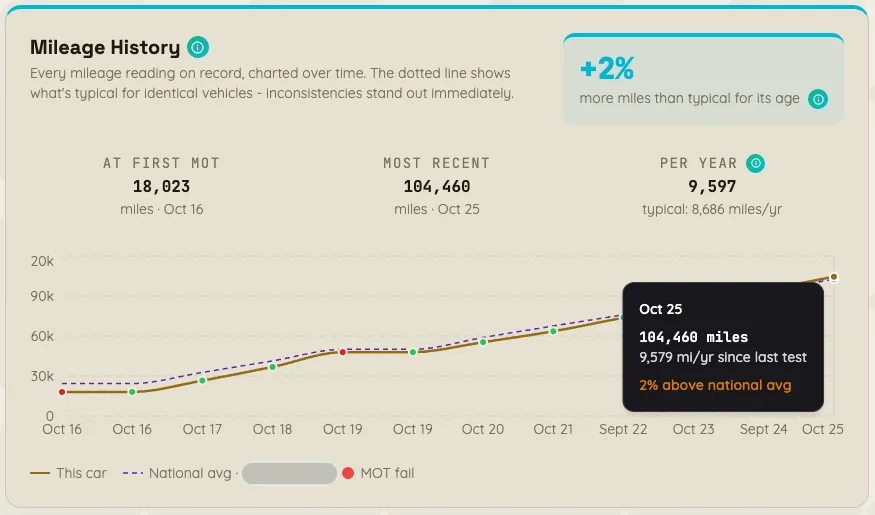
The raw MOT history shows the mileage recorded at each test - that data is always free. As part of the full Bib, BIB plots every recorded mileage on a visual timeline and adds context:
Mileage Timeline Chart
Every recorded mileage from this car's MOT history plotted chronologically - so the direction of travel is clear at a glance. Drops are unmistakeable on a chart in a way they aren't in a table of numbers.
Context Against the Model
The recorded mileage is benchmarked against typical annual mileage for this model and year, so you can assess whether the numbers make sense for the car's age and use.
A clocked car can cost you thousands - in inflated purchase price, premature mechanical failure, and a resale value that doesn't reflect what you paid. Check the mileage record before you make an offer.
Get a Bib - £3Quick Answers
What is mileage clocking?
Mileage clocking is the practice of winding back or electronically resetting a car's odometer to show a lower reading than the vehicle has actually covered. It inflates the car's market value and conceals the true level of mechanical wear. The National Mileage Register estimates that around 1 in 20 used cars in the UK has had its mileage tampered with.
How can I tell if a car has been clocked?
The most reliable method is to check the car's MOT history. Every MOT test records the mileage at the time of inspection, creating an independent audit trail the seller cannot alter. If the recorded mileage decreases between two tests, or if there are suspicious jumps that contradict the car's usage pattern, those are red flags. BIB's mileage history graph visualises this timeline and benchmarks the reading against thousands of similar vehicles.
Is mileage clocking illegal in the UK?
Yes. Selling a vehicle with a tampered odometer is a criminal offence under the Fraud Act 2006 in the UK, and a civil offence under the Consumer Protection from Unfair Trading Regulations 2008. If you purchase a clocked car you may have grounds for a refund and compensation. Always check the MOT mileage history before buying.
What is a suspicious mileage pattern in a used car?
Three patterns are worth scrutinising in a car's MOT mileage record: a mileage reading that decreases between two tests (direct evidence of tampering); a mileage figure that is unusually low for the car's age compared to similar examples; and a sudden change in annual mileage pattern - for example, a car covering 15,000 miles a year for four years and then apparently covering only 2,000. BIB flags all three automatically.
What it looks like in your report
Mileage History Graph screen